
06
|
Fondations réglementaires
En 2025, un consensus mondial a commencé à se dessiner : les stablecoins ne sont pas des actifs spéculatifs, mais une nouvelle forme de monnaie numérique qui doit être sûre, remboursable, transparente et intégrée dans l'état de droit. Les décideurs politiques du monde entier convergent désormais vers une approche similaire qui place les stablecoins réglementés dans le périmètre du système financier tout en favorisant l'innovation dans l'infrastructure monétaire de l'internet.
Les États-Unis ont adopté la loi GENIUS en juillet 2025, établissant un cadre fédéral pour les stablecoins, garantissant qu'ils soient réglementés en tant qu'instruments de paiement entièrement adossés, avec des protections solides pour les consommateurs et une intégrité financière assurée. Le GENIUS fixe des limites claires. Les stablecoins doivent être adossés à parité par des espèces et des bons du Trésor à court terme ; les émetteurs doivent fournir des divulgations auditées mensuelles ; les paiements de rendement des émetteurs aux détenteurs sont interdits ; et les créances des détenteurs de stablecoins bénéficient d'une super-priorité en cas de faillite. Les émetteurs sont considérés comme des institutions financières en vertu du Bank Secrecy Act et sont soumis à des exigences strictes en matière de lutte contre le blanchiment d'argent (LBC), de sanctions et de conformité technique, y compris l'obligation de se conformer aux ordonnances des forces de l'ordre. Les émetteurs étrangers réglementés sont autorisés à accéder aux marchés américains selon des règles claires d'équivalence et de réciprocité, ce qui signifie que seuls ceux provenant de régimes réglementaires comparables et soumis à une surveillance américaine peuvent accéder au marché américain.
En décembre 2025, Circle a reçu l'approbation conditionnelle de l'Office of the Comptroller of the Currency (OCC) pour établir une banque de trust nationale, la First National Digital Currency Bank, N.A. Une fois pleinement approuvée, la First National Digital Currency Bank fonctionnerait comme une banque de trust réglementée au niveau fédéral, soumise à la surveillance de l'OCC, et superviserait la gestion de la réserve d'USDC pour le compte de l'émetteur américain de Circle. Cette approbation conditionnelle représente une étape importante dans les efforts de Circle pour renforcer davantage l'infrastructure soutenant l'USDC, le plus grand stablecoin réglementé au monde, et pour répondre aux exigences de la loi GENIUS.40
Le GENIUS a mis fin de manière décisive au vide réglementaire qui permettait aux acteurs offshore d'accéder au marché américain. En consacrant la protection des consommateurs, les garanties de stabilité financière et les contrôles de sécurité nationale, les États-Unis ont établi une référence mondiale pour les dollars numériques réglementés.
D'autres juridictions de premier plan ont déjà mis en œuvre ou sont en train de finaliser des régimes de stablecoins reflétant des principes similaires :
Union européenne
Dans l'Union européenne, le cadre MiCA est en vigueur depuis 2024. Il réglemente les stablecoins adossés à des monnaies fiduciaires en tant que jetons de monnaie électronique (EMT). MiCA interdit les stablecoins algorithmiques et impose des plafonds sur les jetons libellés en devises non européennes utilisés à grande échelle pour les paiements réels, afin de protéger la souveraineté monétaire.
Royaume-Uni
Le Royaume-Uni met en œuvre un cadre par l'intermédiaire de la Financial Conduct Authority qui traite les stablecoins éligibles comme des instruments de paiement. Les émetteurs doivent séparer leurs réserves, rembourser à parité et se conformer aux règles prudentielles et de conduite. La Banque d'Angleterre assurera une surveillance systémique des grands émetteurs. Le cadre est conçu pour intégrer les stablecoins dans les paiements tout en préservant la stabilité financière.
Japon
Au Japon, la Diète (parlement) a adopté en 2022 des amendements à la loi sur les services de paiement légalisant les stablecoins. L'Agence japonaise des services financiers a ensuite rédigé des réglementations entrées en vigueur le 1er juin 2023. La loi modifiée exige que les stablecoins soient émis uniquement par des banques agréées, des sociétés de fiducie ou des agents de transfert de fonds enregistrés. La loi autorise l'approbation de stablecoins émis tant au niveau national qu'à l'étranger et impose une couverture totale par des actifs sûrs ainsi que des droits de remboursement solides. Cette clarté réglementaire a déjà incité de grandes institutions financières japonaises à commencer à piloter l'émission de stablecoins.
Hong Kong
Hong Kong, l'un des plus grands marchés financiers mondiaux, a rendu son ordonnance sur les stablecoins effective le 1er août 2025. Elle exige que les stablecoins commercialisés auprès du public soient agréés sur le territoire. La loi impose des exigences de haut niveau en matière d'actifs de réserve, de remboursement, de transparence et de conformité à la lutte contre le blanchiment d'argent.
Singapour
À Singapour, la loi de l'Autorité monétaire de Singapour (MAS) régissant les actifs numériques est le Payment Services Act (PSA) pour les jetons de paiement numériques (DPT) et le Securities and Futures Act (SFA) pour les jetons de sécurité. La surveillance de la MAS met fortement l'accent sur la protection des consommateurs, la lutte contre le blanchiment d'argent et le financement du terrorisme (LBC/FT) et l'atténuation des risques, exigeant des prestataires de services de jetons numériques (DTSP) agréés qu'ils protègent les actifs, séparent les fonds et restreignent la promotion auprès des particuliers, créant ainsi un cadre axé sur les risques pour l'innovation. En 2023, la MAS a proposé un cadre pour les stablecoins à devise unique (SCS) indexés sur le SGD ou les devises du G10 ; toutefois, ce cadre reste en attente de l'approbation du Parlement avant d'entrer en vigueur.
Suisse
La Suisse a publié de nouveaux projets législatifs concernant les cryptomonnaies et les stablecoins, incluant une consultation publique, qui mettent l'accent sur la qualité des réserves, les droits de remboursement et la conformité en matière de lutte contre le blanchiment d'argent.
Émirats arabes unis
Les Émirats arabes unis ont introduit le règlement sur les services de jetons de paiement (Payment Token Services Regulation), entré en vigueur en juillet 2024, qui établit le premier cadre fédéral du pays pour les stablecoins adossés à des monnaies fiduciaires. Il soumet les émetteurs et les prestataires de services à une licence délivrée par la Banque centrale et exige des jetons de paiement entièrement adossés et remboursables à parité (1:1). L'ADGM et le DIFC ont également introduit des régimes de stablecoins alignés qui imposent un remboursement à parité, des réserves ségréguées de haute qualité, une conformité stricte aux normes LBC/FT et à la Travel Rule, tout en interdisant les intérêts ou les rendements, créant ainsi l'un des environnements réglementaires les plus complets au monde pour les actifs numériques adossés à des monnaies fiduciaires.
Canada
Le Canada a introduit le Stablecoin Act en novembre 2025, qui établirait un cadre prudentiel fédéral pour l'émission de stablecoins sous la supervision de la Banque du Canada. Ce cadre axé sur les paiements est conçu pour débloquer la croissance des stablecoins indexés sur le dollar canadien et consolider la position du Canada en tant que leader dans le domaine du règlement tokenisé et des marchés des changes.
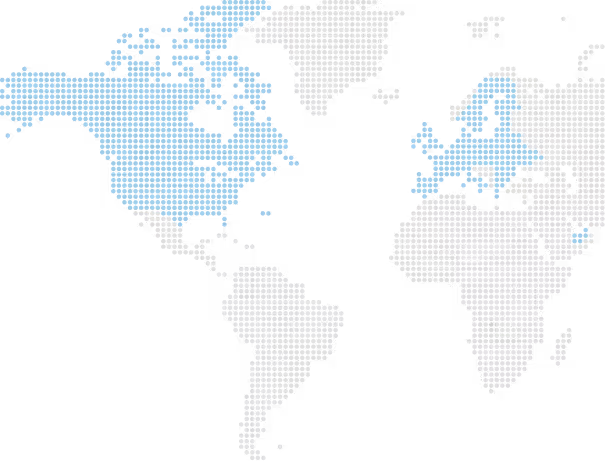
Global frameworks converge
Des organismes de normalisation internationaux, tels que le Conseil de stabilité financière et la Banque des règlements internationaux, ont également publié des principes directeurs. Ceux-ci mettent l'accent sur une couverture à un pour un, une surveillance prudentielle et une coordination réglementaire transfrontalière.
Dans leur ensemble, ces cadres témoignent d'un alignement mondial croissant. Les stablecoins sont formellement intégrés aux systèmes financiers réglementés, créant ainsi une base de confiance pour les entreprises, les banques et les investisseurs institutionnels. Cette clarté réglementaire permet aux stablecoins de servir de couche monétaire au système financier Internet, un rôle aux implications considérables.
À mesure que les cadres mondiaux convergent, de nouvelles opportunités émergent. Les stablecoins réglementés sont désormais en mesure de soutenir le règlement des marchés financiers, les opérations de trésorerie d'entreprise, le financement du commerce transfrontalier et les paiements des consommateurs. Avec le GENIUS aux États-Unis, MiCA en Europe et des régimes comparables en Asie et ailleurs, le monde entre dans une ère harmonisée et favorable à l'innovation pour la monnaie numérique.
Télécharger le PDF
Télécharger le rapport complet 2026 sur l'Internet
Rapport sur le système financier
40. « Circle reçoit l'approbation conditionnelle de l'OCC pour une charte de trust national. » Circle. 12 décembre 2025. Consulté sur : https://www.circle.com/pressroom/circle-receives-conditional-approval-from-occ-for-national-trust-charter
This marketing communication is issued by Circle Internet Financial Europe SAS, a licensed Electronic Money Institution under n°17788 and registered Digital Assets Services Provider in France under n°E2024-111.
White Papers relating to electronic money tokens that we issue in the European Economic Area (EEA) ("EMT") are published and available on our Website. Holders of EMT have the right of redemption against the issuer at any time and at par value.
Contact: Web: https://www.circle.com | Email: [email protected] | Phone number : +33 (1) 59000130